
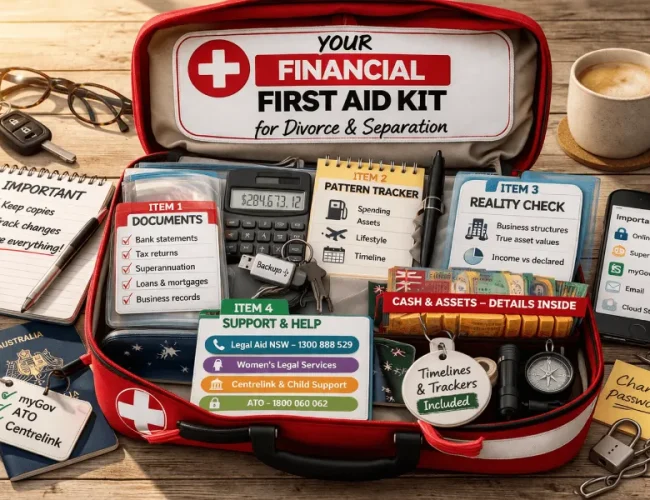
Most people don’t realise how quickly things can change until they’re already dealing with the fallout. Separation and divorce are life events that come with real emotional upheaval, but they also affect your resources. Just like you’d reach for a bandaid when you’ve cut your finger or scraped your knee, it helps to have a financial first aid kit prepped and ready for the days, weeks and months ahead. Particularly if your former spouse isn’t being cooperative with the numbers or you suspect something’s off.
At The Hidden Asset, we provide investigative services that help people make sense of the numbers after a relationship breaks down. We want to give you a clearer view of where you stand so you can move through the process with confidence and work towards a fair outcome. Here’s what belongs in this kit.
Step 1: Getting organised
Think of this like the antiseptic in a medical first aid kit. It’s what you use first to clean things up so you can see what you’re dealing with.
Items to pack:
- Bank statements, tax returns, super and loan records
- A clear list of accounts, assets and anything that feels unclear
- A basic timeline of key dates, transactions or changes
Get this together early. It’s much harder to track things down after accounts change, access is restricted, or details start to move. What you have now may not stay that way. Don’t rely on access alone; download everything or take screenshots and save them in one place so it’s readily available.
Step 2: Checking your credit
This works like a temperature check. It helps detect issues that aren’t immediately obvious but could point to something hiding underneath.
Instead of packing the thermometer, make sure you’ve got:
- A copy of your credit report from providers like Equifax or Experian
- Notes on any unfamiliar debts, joint liabilities or accounts you don’t recognise
- A saved record of your credit position at this point in time
You can’t respond to what you haven’t seen, and this is often where red flags appear or earlier suspicions are confirmed. If anything stands out, document it while it’s fresh rather than trying to recall it later.

Step 3: Contacting your banks
Now, you need to protect your access and put some financial structure in place early. Just like wrapping a bandage around an injury, planning ahead helps cover what’s exposed and reduces the risk of further damage.
Items to pack:
- A record of any communication with your bank about the separation
- Details of any accounts in your sole name, or steps taken to open one
- Notes from conversations with your solicitor before making any major financial changes
If your ex-partner decides to play games here and makes changes that limit what you can control, it can be difficult to undo. It’s important to get ahead of that.
Step 4: Listing your support network
Having the right people around you helps. Just as you’d keep key numbers in a first aid kit, like the Poisons Information Centre, your separation and divorce support network is something you need on hand. These are the people and services you’ll turn to when you need advice. You’re not expected to figure this out on your own.
Knowing who to call and when makes the process easier to manage. Add these contacts to your kit:
- Legal Aid, your solicitor and any financial professionals involved
- Information for services like Centrelink or emergency support if needed
- Numbers for the Family Relationship Advice Line and other relevant support services
Step 5: Looking after yourself
This is the part most people forget about completely or deliberately push aside. But you shouldn’t. The gloves in a traditional first aid kit protect you while you deal with physical injury. While you’re experiencing the emotional kind, don’t leave them out. You’re making decisions now that will affect your financial future. Doing that while exhausted or overwhelmed rarely leads to the best outcome.
There will likely be pressure at times to keep things moving, to respond, to agree, to just get it over with. You don’t have to do everything on someone else’s timeline. Take a step back to consider what’s being asked of you and whether it protects your position.
Here are some lists you can keep in your kit as a reminder:
- A short list of go-to resets, like a walk, a coffee with a friend, or time away from it
- A couple of activities that help you clear your head when things feel heavy
- A simple plan for pacing yourself, so you’re not trying to deal with everything at once
This isn’t about doing more. It’s about having something to come back to when things start to feel like too much.
Closing up the kit
Before you pull the zipper on your kit and call it complete, take a moment to remind yourself that you can do this. Separation and divorce are difficult experiences, and nobody moves through them without setbacks. The best thing you can do is have your financial first aid kit ready and start using it early.
Even small pieces of financial detail can fill in much larger parts of the puzzle later on. If you think it’s relevant, add it to your kit.
And if you suspect you’re not getting the full picture and want to ensure your settlement is fair, contact us at The Hidden Asset.
Forensic Accounting and
Divorce Services built for clarity
Beyond the numbers, there’s always a story, and we know where to look. From crypto trails and lifestyle audits to spending patterns and disclosure gaps. Our tools and proven systems are designed to uncover the financial truths bringing transparency, perspective, and a sense of direction.


Case Studies
Think you’ve heard it all? Our case studies lift the lid on what really goes down when money, trust, and separation collide.






FAQS
What should be included in a financial first aid kit for divorce or separation?
A financial first aid kit should include key documents such as bank statements, tax returns, superannuation records, and loan details, along with a clear list of assets and accounts. It’s also important to create a timeline of financial activity and save copies of everything while access is still available. This preparation helps you stay informed and reduces the risk of missing critical information later.
Why is checking your credit report important during separation?
Reviewing your credit report during divorce or separation helps identify debts, joint liabilities, or accounts you may not recognise. It acts as an early warning system for financial issues that may not be immediately visible. Documenting anything unusual ensures you have a clear record if concerns need to be addressed later.
How can I protect my finances if my former partner is uncooperative?
Taking early steps such as contacting your bank, documenting communications, and securing accounts in your own name can help protect your financial position. Keeping notes from discussions with your solicitor before making changes is also important. If you suspect inconsistencies or missing information, engaging a private investigator can help clarify the financial picture.
Who should be part of my support network during divorce or separation?
Your support network may include your solicitor, Legal Aid, financial professionals, and relevant services such as Centrelink or the Family Relationship Advice Line. These contacts provide guidance and help you navigate decisions at different stages. Having this information ready makes it easier to access support when needed.
Why is it important to manage stress when making financial decisions during separation?
Emotional strain can affect your ability to make clear, informed decisions about your financial future. Taking time to pause, reflect, and avoid rushed decisions helps you better assess what’s being asked of you. Simple strategies like taking breaks or seeking support can improve clarity during the divorce or separation process.
Get in touch
Not sure where to begin? You’re not alone. We guide individuals and professionals through the financial complexities of divorce – step by step, with calm, expert support. Whether you’re feeling unsure or simply need a place to start, we’re here to help. Use the form to get in touch, or book an appointment today.