

Most people know that reviewing bank statements is part of my role, but not everyone realises that I’m also a licensed private investigator. In my work supporting people through divorce, I draw on a mix of qualifications, including certification as a fraud examiner and a foundation in accounting, alongside years of professional and personal experience, to help ensure outcomes are fair and thorough.
I founded The Hidden Asset to support people who are looking for clarity and fairness at a time when both can feel hard to come by. Separation often brings uncertainty, particularly when it comes to money. In situations like that, it is not just about reviewing figures. It is about having the right training and approach to examine them properly.
Accounting is the foundation, but it’s only the beginning
My journey with numbers began with a Bachelor of Commerce in Accounting, which laid the foundations for understanding financial statements, interpreting balance sheets and recognising how assets, liabilities and equity interact. It also gave me an awareness of how certain measures and adjustments can influence reporting figures. I have been putting that knowledge into practice for more than 20 years now.
A solid technical foundation is crucial for this work. In divorce cases, financial disclosure often forms the backbone of negotiations. Everything begins with understanding and interpreting what is presented rather than simply accepting it at face value.
Understanding BAS and Payroll Systems in Business Matters
Throughout my career, I have worked with businesses and developed a strong understanding of BAS and payroll systems. You might wonder what that has to do with divorce and financial investigation, but property settlements often rely heavily on financial disclosure, and business structures can significantly influence how wealth appears on paper. When money is moving through those systems in ways that are not immediately obvious, I know where to look.
Through formal BAS and payroll systems training, I gained a deeper understanding of how GST, PAYG withholding, superannuation and payroll reporting operate in practice. That knowledge is particularly important when one party to a divorce runs a business. Income can be structured through wages, director drawings or retained earnings. Tax payments can be adjusted. Refunds can arise later. Without understanding how these systems function, it is easy to miss where value is sitting.
For example, overpaying tax through a business can result in a substantial refund at the end of the financial year. If that is not identified and considered, it may never form part of the marital asset pool. The same applies to payroll arrangements, director loans and adjustments lodged through BAS reporting. These are not always obvious from a quick review of financial statements. Understanding how these systems operate allows me to focus on areas that might otherwise go unnoticed.
Certified Fraud Examiner
I’m also a Certified Fraud Examiner, which is a qualification issued by the Association of Certified Fraud Examiners. It’s not the sort of title most people are familiar with, but it reflects formal training in how financial information can be concealed or manipulated. The course is built around structured investigation, looking at patterns over time rather than isolated transactions, and building an evidence chain before forming a view. It also reinforces the importance of documenting reasoning clearly, so any findings are well supported and defensible.
The training also sharpened my ability to recognise common ways figures can be concealed or presented in a way that hides the true position. Sometimes that is deliberate. Sometimes it is simply complicated. Either way, the discipline is the same. Ask better questions. Look for behaviour within the numbers. Make sure any findings are supported, structured and capable of standing up to scrutiny.
One part I found particularly valuable was the legal context. I am not a lawyer, and I certainly do not try to be one, but understanding how financial analysis intersects with legal process matters. It means the work I produce is not just detailed, but also relevant and practical within the broader divorce process.
Certificate III in Investigative Services
This is the one that tends to get attention, because there is something about the words “private investigator” that sparks instant intrigue.
While it really is interesting work, and I hold a Certificate III in Investigative Services issued by the Professional Investigators College of Australasia, along with a Security Industry Licence that legally permits me to operate in that capacity, it probably does not look much like what you have seen on television.
In reality, private investigation is far less dramatic and far more disciplined than that. The training focuses heavily on confidentiality, privacy law and conducting investigations legally and ethically.It covers how to handle information properly, access and use data within the law, and prepare professional reports that withstand scrutiny.
Where this becomes particularly relevant in a divorce is the ability to lawfully examine third party information and use open source intelligence to support financial analysis. The training itself places strong emphasis on confidentiality and the requirements of the Privacy Act 1988, along with the broader legal obligations that govern investigative work, ensuring it is carried out properly and ethically within the law.
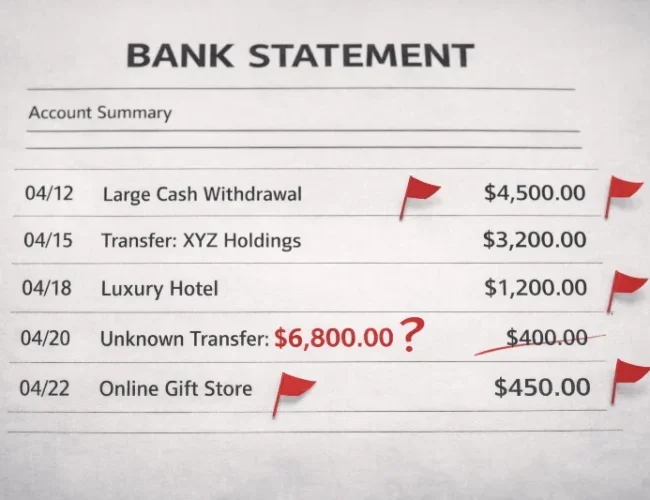
It also strengthened my ability to manage and analyse large volumes of data. In divorce matters, that can mean identifying shifts in spending behaviour, tracing the movement of funds or uncovering accounts that may not have been initially disclosed.
Why this combination matters
At The Hidden Asset, what I do sits at the intersection of accounting, investigation and lived experience. Each qualification and certification serves its purpose, but it is the combination of all of it that shapes my approach.
When financial matters become complicated, it is often because there are layers people do not immediately see. That might include:
- Businesses operating through companies or trusts
- Director loans or retained earnings sitting within an entity
- Tax refunds or adjustments that have not yet been realised
- Related party transactions between family members or associated entities
- Changes in spending patterns over time
- Assets held in different names but effectively controlled by one party
These are not unusual situations. They are simply details that can materially affect how wealth is understood and divided.
If you would like to discuss your situation in confidence, I am here to help.
Forensic Accounting and
Divorce Services built for clarity
Beyond the numbers, there’s always a story, and we know where to look. From crypto trails and lifestyle audits to spending patterns and disclosure gaps. Our tools and proven systems are designed to uncover the financial truths bringing transparency, perspective, and a sense of direction.


Case Studies
Think you’ve heard it all? Our case studies lift the lid on what really goes down when money, trust, and separation collide.






FAQs
What does a Certified Fraud Examiner do in a divorce case?
A Certified Fraud Examiner specialises in analysing financial information to detect hidden assets, income manipulation, or inconsistencies in financial disclosures. Their training focuses on investigating financial patterns and building evidence to support fair outcomes in divorce settlements.
Why would a licensed investigator be involved in a divorce?
A licensed investigator can look beyond financial statements to uncover information that may not be immediately visible. This may include tracing financial behaviour, identifying inconsistencies, and gathering evidence to support a clearer understanding of each party’s true financial position.
How can business structures affect divorce settlements?
Business structures can influence how wealth appears on paper. For example, tax arrangements, payroll systems, or director loans may impact reported income or assets. A professional with accounting and investigative experience can identify these complexities and ensure they are properly considered in a property settlement.
What kinds of financial issues can arise during divorce?
Divorce cases can involve hidden assets, understated income, unusual financial transactions, or complex business arrangements. Identifying these issues is important because incomplete financial disclosure can affect how assets are divided and may lead to unfair outcomes.
When should someone consider financial investigation support during divorce?
Financial investigation support can be helpful at many stages of separation. Some people seek help when reviewing financial disclosures during settlement negotiations, while others engage support earlier if they suspect financial concealment or want clarity before formal proceedings begin.
Get in touch
Not sure where to begin? You’re not alone. We guide individuals and professionals through the financial complexities of divorce – step by step, with calm, expert support. Whether you’re feeling unsure or simply need a place to start, we’re here to help. Use the form to get in touch, or book an appointment today.